AEO in June 2026: Three Things That Quietly Stopped Working
AEO is no longer a technical job. Between Google's AI Mode launch, ChatGPT's inline brand links, and the death of llms.txt, the rules changed faster than most agencies kept up with. Here's the new playbook.
Paul Saunders
Founder, Smash It Marketing
If you've been tending an Answer Engine Optimisation strategy since the start of 2026, the floor moved under you twice in May. Google reset its default AI Mode model at I/O on 19 May, ChatGPT silently shipped inline brand links on 7 May, and a 75,000-brand study put the final nail in a tactic that most agencies were still selling as a service. The result is that several of the AEO moves that worked in March are now noise, and several that nobody was talking about have become the strongest visibility signals on the open web.
This isn't a rewrite of AEO. The bones still hold. But three specific tactics quietly stopped working, three replaced them, and the shift is large enough that small business owners deserve a plain-language update before the next quarter rolls around.
What Quietly Stopped Working
The first surprise is llms.txt. The file was supposed to be the AEO equivalent of robots.txt — a simple way to tell AI crawlers what your site is about. Eighteen months in, an analysis of 515 million bot events showed AI companies are essentially ignoring it. Only 0.1% of large language model crawls touched a /llms.txt file. Google's own Gary Illyes confirmed in mid-2025 that Google has no plans to support it, and John Mueller compared it to the keywords meta tag. The signal is unambiguous: useful for developer-tool documentation, ineffective for AI visibility. If you've been planning your AEO around llms.txt, it's time to redirect that effort.
The second surprise is keyword-density content. The reasoning models powering today's AI search — Gemini 3.5 Flash, GPT-5.5, Claude — explicitly down-weight content that reads like it was optimised for a keyword count. The Ahrefs study of 75,000 brands found content volume had "almost no relationship" with AI visibility. Writing more, faster, with more variations of the same keyword stopped paying dividends sometime in the first quarter.
The third surprise — the one that stings — is press releases and self-described authority. Claude refuses to cite a brand's own claim without third-party validation. ChatGPT, after the May 7 update, increasingly follows the same pattern. The "we're the leading provider of X in Perth" framing that built a generation of SMB websites is now invisible to AI search unless a third party has already said it on the public web.
What Replaced Them
Brand mentions on YouTube, Reddit, and local publications. The Ahrefs study of 75,000 brands found YouTube mentions correlated with AI visibility at 0.737 — the single strongest signal of any they measured. Backlinks came in at 0.194. That's not a small gap. It's a 3.8x difference. A separate study from 5W Public Relations found Reddit and Wikipedia together drive over 25% of ChatGPT citations in the United States, with Reddit alone growing 73% in three months. For a Perth small business this means the conversation about you on a creator's review channel, in a relevant subreddit, or in a local publication outweighs almost everything you do on your own site.
Answer-first content blocks. A 40 to 60 word block placed directly under your H1 — stating in plain language what the business does, who it serves, where, and the one distinguishing fact — is the snippet AI tends to lift verbatim. Pages built this way also see a 41% citation lift when an expert quote is added, and a 30% lift when a statistic is included.
Google Business Profile activity. AI Overviews still only appear in roughly 7% of local-intent searches, which makes GBP disproportionately powerful for SMBs. Weekly posts, new photos, fresh reviews, and answered Q&As keep your profile in the "regularly active" bucket that AI systems lean on for local recommendations. Activity matters more than the activity's polish.
The Numbers That Should Reshape Your Plan
A few statistics deserve to sit on a sticky note next to your monitor for the rest of the year.
AI Overviews now appear in roughly 48% of tracked queries, up from 31% a year earlier, and they trigger on 99.9% of informational keywords. Click-through rate on AIO recovered from a December 2025 low of 1.3% back up to 2.4% by February — an 85% rebound in two months. Brands cited inside an AI Overview earn approximately 120% more clicks per impression than uncited brands on the same query. And on 7 May 2026, ChatGPT started embedding inline brand links inside responses — the share of responses with inline links jumped 14x in a single day, and referral traffic to tracked brands rose 157.7% week over week.
Read those numbers together and the picture is clear. Citation, not ranking, is the new currency. Brands inside the answer get the click. Brands left outside it lose the conversation.
Three Things to Do This Monday
The first is the answer block. Open your homepage. Underneath your H1, write 50 words that state in plain English what your business does, who it serves, where (Perth and Western Australia, in your case), and the one distinguishing fact. Bold the business name and the city. Save. Repeat on your top four service pages. That's the block AI will quote.
The second is three brand mentions in 30 days. Pick one customer testimonial post on a relevant subreddit — written by the customer, not by you. Pick one creator, podcaster, or YouTuber in your category and book a guest spot or a quick interview. Pick one local publication or industry blog and earn a mention by giving them a quote, a statistic, or a tip. Don't link-beg. Earn the mention.
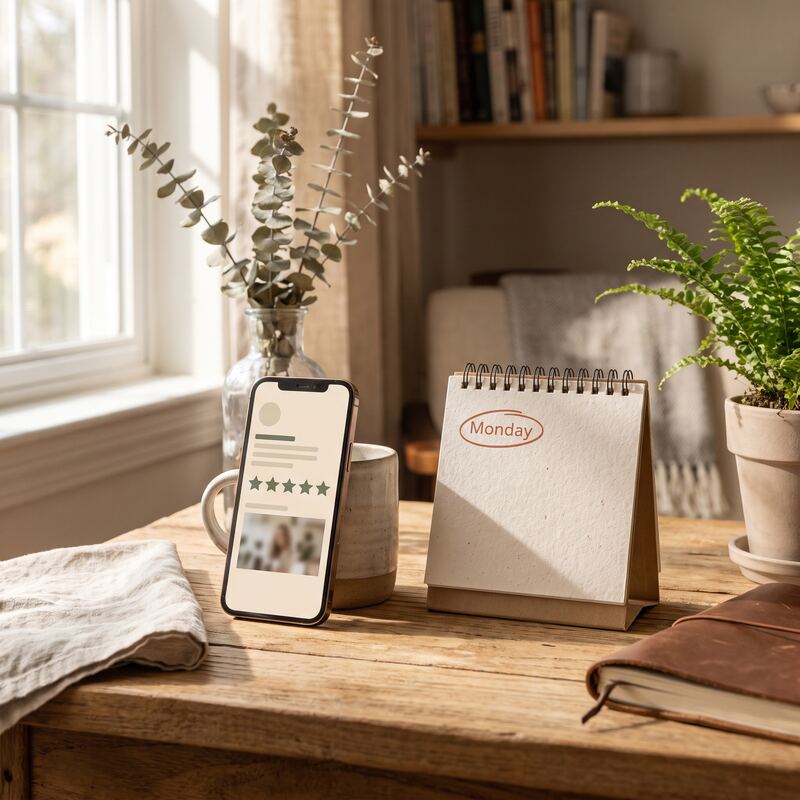
The third is the weekly GBP drumbeat. Set a recurring 10-minute Monday calendar block. Post one update, upload two new photos, reply to every review since the last block, and add one new Q&A. The cumulative effect on AI visibility for local searches is significant, and the work compounds.
If you want a broader frame for where AI search is heading or why ChatGPT may not know your business yet, the earlier pieces still hold up. The June 2026 update is a course correction, not a U-turn.
The Underlying Shift
The deeper point in all of this is that AEO has stopped being a technical job. It used to reward developers and SEO specialists who could ship schema, build llms.txt, audit crawl behaviour. As of mid-2026, the strongest signals are PR-shaped: mentions, conversations, citations, photos, fresh activity. The work moved from the codebase to the calendar.
That's actually good news for a small business. The tactics that work now are ones you can run yourself, with no developer, in time you already spend on the business. The tactics that don't work were never going to be a long-term moat anyway.
If you'd like a closer look at how AI search is reshaping discovery for Australian small businesses, the territory is moving fast enough that quarterly check-ins are worth doing. The next checkpoint is probably September — by then the agentic booking that Google previewed in May will be live in the US and starting to show its hand in Australia.
For now: open your homepage, write the answer block, and put the Monday GBP appointment on your calendar. Everything else can wait until you've done those three.
Related services: AI readiness & AEO for visibility inside AI answers, and SEO built on real demand for the queries that convert.
Paul Saunders
Founder of Smash It Marketing — a boutique, AI-first agency pairing 18 years of Google Ads with an AI-first service suite. Book a call.