Why a Client Workbench Beats Monthly Agency Reports
The monthly PDF is a status report about work that finished weeks ago. A client workbench is a live board you and your agency both work from, holding every question, answer and decision in one place, with the answer attached to the thing it unblocks.

Paul Saunders
Founder, Smash It Marketing

Most agency relationships run on two rhythms that don't line up. The agency works daily. The client hears about it monthly. In between sits a slow drip of status emails, a shared inbox nobody owns, and a PDF that arrives on the seventh of the month describing work that finished three weeks earlier.
The fix isn't a better report. It's a different artefact entirely: a shared workbench that both sides open, edit and answer questions inside. I've been running client work this way for a while now, and the thing that surprised me wasn't the reporting benefit. It was how much faster the work moved once the questions had somewhere to live.
What a Client Workbench Actually Is
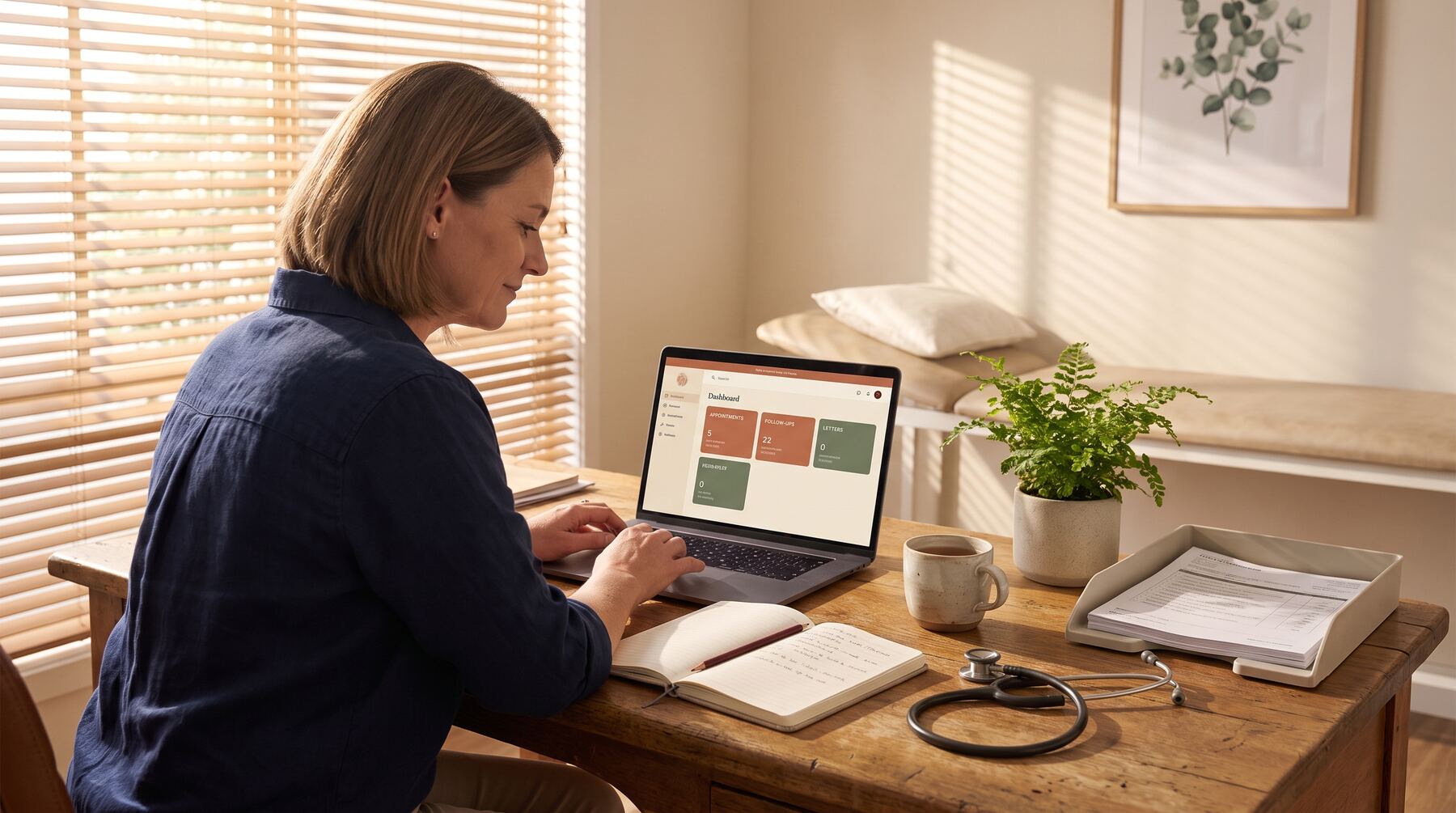
A workbench is a single web page, private to you and your agency, that holds the current state of the work. Not a metrics dashboard. A work board. Each item is a card: what's being done, who it's waiting on, what the next action is, and what percentage of it is finished.
The important part is the second half of that sentence. A card that says "Website copy: in progress" is a status report. A card that says "Website copy: blocked on your product warranty terms. Reply in the comment below and I'll ship it same day" is a piece of machinery. The first tells you something. The second moves something.
Cards carry comments. When I need a decision from a client, the question goes on the card it belongs to, and the answer comes back on the same card. Six weeks later, when a client asks why I chose that wording, the reasoning is still sitting next to the work rather than buried in a mail thread that three people were copied into and two of them have left.
What a Workbench Solves That Reporting Doesn't
Ask any small business owner what they find hardest about working with a marketing agency and you'll rarely hear "the reporting isn't detailed enough". You'll hear something closer to: I don't know what's happening, I don't know what they need from me, and I don't know whether the thing I asked for three weeks ago is done.

Those are three different problems and the monthly report solves none of them. It answers a question the client wasn't asking (what were the numbers last month?) and leaves the three real ones open for another thirty days.
A workbench answers all three by construction. What's happening is the board. What's needed from you is the set of cards flagged as waiting on you, usually two or three, each with a specific question rather than a vague request for feedback. And whether the thing you asked for is done is visible without asking anyone.
There's a second-order effect worth naming. When the blocker is visible on a board that both parties look at, it gets cleared in days rather than weeks. Not because anyone is being chased, but because a card sitting there marked waiting on you since Tuesday is a much clearer prompt than an email that scrolled off the first screen.
Why the Monthly Agency Report Persists
It persists because it's easy to produce and it looks like value. Thirty slides of charts feels substantial in a way that "here are the four things I changed and here's what happened" does not. Agencies also use it as a retention device: the report is the visible artefact that justifies the invoice.
That's the honest reason it survives, and it's a bad one. A report describing a month that has already ended cannot change the outcome of that month. Its only real function is to inform the next month's decisions, which means anything genuinely decision-useful should have surfaced weeks earlier, when there was still time to act on it.
The report isn't worthless. A monthly read that says here's what I learned and here's the plan is worth having. But it should be a plan, not a status update, and it should be the smallest artefact in the relationship rather than the main one. The marketing metrics a small business actually needs fit on one page. Everything else is padding.
How to Set Up a Client Workbench
You don't need a big platform for this, and I'd argue you shouldn't use one. Most client-portal products are built for agencies with forty accounts, which means they optimise for the agency's convenience rather than the client's clarity. What you want is a board with very few states and no login ceremony.

Three rules make the difference between a workbench people use and another abandoned tool. I hold myself to all three, because the failure is almost always on the agency side.
One card, one next action. Every card names the single next thing that has to happen and who owns it. If a card can't name its next action, it's a wish, not work, and it belongs somewhere else.
Questions live on the card, not in email. This is the rule that takes discipline, mostly from the agency side. The moment a decision gets made in a phone call and never written down, the board stops being true, and a board that isn't true stops being read.
Percentage complete is honest or it's noise. A card that has sat at 80% for a month is telling you something real about the work, and hiding that behind a rounded-up number costs more trust than the delay itself ever would.
The technical build is genuinely small. Learning to build a real-time marketing dashboard is a weekend of work now that vibe coding your own software is realistic without a developer, and hosting it costs nothing meaningful. The hard part was never the software.
What Changes When You Share a Workbench
The first thing that changes is the volume of status email, which drops close to zero. The second is meeting length. A call that used to open with fifteen minutes of catch-up now opens with a decision, because both parties arrived having read the same board.
The third change is the one I didn't expect. Clients start adding cards. Something occurs to them on a Sunday and instead of holding it until the next call or firing off an email that lands mid-task, it goes on the board where it can be sequenced against everything else. The relationship shifts from reporting to a client toward working with one, which is the arrangement both sides thought they were buying in the first place.
None of this replaces judgement, strategy, or the work itself. A workbench is a communication surface, not a service. But it removes most of the friction that makes small-agency relationships feel slower than they are, and it makes the work legible without anyone having to write a status update about it.
If your current arrangement is a monthly PDF and a shared inbox, the honest test is simple: right now, without asking anyone, can you name the one thing your agency is waiting on you for? If you can't, the reporting isn't the problem.
If you'd like to explore any of this further, whether that's a workbench of your own or just a better rhythm with whoever you're working with now, please reach out. I'm happy to talk it through, no obligation.
Related services: marketing reporting and dashboards for a live view that blends Google Ads, GA4 and Search Console, and business strategy and competitor intelligence for deciding what belongs on the board in the first place.
Paul Saunders
Founder of Smash It Marketing — a boutique, AI-first agency pairing 18 years of Google Ads with an AI-first service suite. Book a call.